Practical daily habits and exercises to support cognitive well-being (Estimated reading time: 5min)
Author: Elham SharifiGhorveh, |Cognitive Health Specialist (Research & Advisory)
Introduction: When the Mind Keeps the Home Alive
“David, 72, finds it tiring to read the newspaper. He struggles to keep up with family
conversations and has stopped playing the piano; he feels like his mind is slowing down.”
In our previous article, we explored “how sleep affects brain health in older adults”. Now, let’s
look at something even more practical: “What daily habits can help prevent cognitive decline and
support a sharper, more energetic mind, so that seniors can live with greater joy, independence,
and clarity?”
This guide introduces simple, science-backed habits that help keep the brain active, resilient, and
engaged, right from home.

1- Move More, Think Better: How Physical Activity Fuels Your Brain 🌿
What the science says:
According to the World Health Organization (2020) and the CDC (2023), older adults should stay
as active as possible. Movement improves memory, reaction time, and mood. The key is to match
the activity with each individual’s physical condition. Even just 10 minutes of enjoyable
movement a day can strengthen the brain.
� Practical suggestions
If the person has limited mobility:
- Sit-to-stand exercises (5–10 reps daily)
- Gentle chair stretches with calming music
- Hand and arm movements paired with deep breathing
If they’re moderately mobile:
- 10–20 minutes of walking in a safe space
- Light gardening or watering plants
- Climbing a few stairs with supervision.
2- Brain Exercises: Simple Stimuli with Lasting Impact
Why it matters:
Research shows that everyday brain challenges, like puzzles or storytelling, learning new skills,
or listening to audiobooks, can help keep your mind sharp and slow down mental aging. (ACSM,
2024; Caerphilly Study)

✅ Suggestions:
- 10 minutes of simple card-matching or crossword puzzles
- Listen to a story and retell it to a grandchild
- Learn basic digital skills with caregiver support
� Note: If the individual isn’t tech-savvy, just listening and talking about the content is valuable.
3- Smart Eating for Brain Health: A Realistic MIND Diet Approach
What is the MIND diet?
Key components:
- Leafy greens & berries: Packed with antioxidants that help slow cognitive
decline - Fatty fish (like salmon): Rich in Omega-3s, supports brain volume
- Eggs: Contain choline, which may improve memory
- Nuts & seeds: Anti-inflammatory and neuron-protective
- Whole grains: Offer steady, long-term energy for the brain
� What to avoid:
High sugar, fast food, and sugary drinks can increase inflammation and affect brain health.
� Easy meal ideas:
- Cooked or puréed vegetables daily
- Steamed fish, lentils, beans, or eggs
- A handful of walnuts or almonds (if no allergies)
- Whole-grain bread or oatmeal
⚠ If appetite or swallowing is an issue:
Try soft foods like vegetable soup, mashed potatoes with olive oil, or light puddings.
4- Mindfulness: A Moment of Focus for All
Why it matters:
Daily meditation or simply focusing on the breath has been shown to reduce stress and anxiety,
while improving attention and working memory (Harvard Health, 2023).
✅ Try this simple routine:
- Sit comfortably and close your eyes
- Breathe deeply and count to 10
- Focus on each breath for 5 minutes daily
� If maintaining focus is difficult, try guided audio or practice alongside a caregiver.
5- Social Engagement: A Natural Brain Booster
Why it works:
Conversations, teaching, and spending time with others keep the brain alert. The Caerphilly
longitudinal study (2022) found that seniors who stayed socially connected performed better
cognitively over time.
Simple ideas:
- Weekly video calls with children or grandchildren
- Sharing old memories with family
- Joining small local gatherings or online book clubs
� Even a heartfelt phone call can brighten the mind. Connection brings joy—and helps maintain
brain vitality.
6- Balanced Living: A Custom Plan for Each Individual
A healthy lifestyle should be realistic and comfortable for the individual, respecting their physical
and emotional needs.
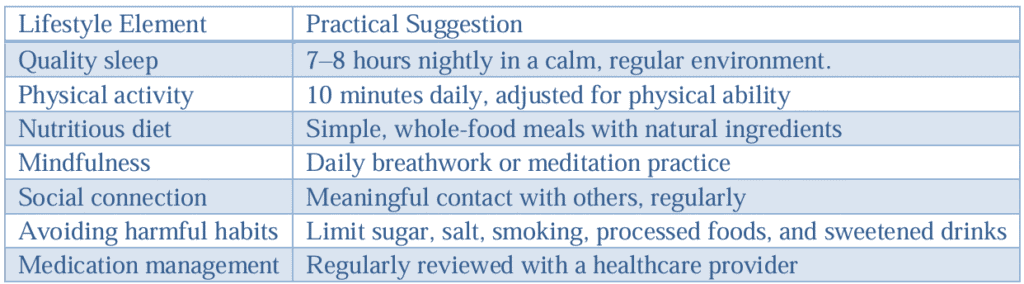
⚠ Important reminder:
Not following every tip perfectly is not a failure. Even 2–3 consistent habits can significantly
support brain health
7- Science is Still Evolving
While many studies show links between these habits and healthier brains:
- Direct cause-effect relationships are still being explored
- Results vary—some individuals may benefit more than others
- Some may need help or simplified alternatives to get st
Conclusion: A Home Where the Mind Feels Alive
Our brain health isn’t just about our genes or prescriptions; It’s often shaped by the small things
we do each day. Even simple acts like: a phone call, a crossword puzzle, a bowl of veggie soup, a
stretch by the window, or five minutes of deep breathing can help keep the brain alert, lift our
mood, and improve quality of life.
Reference:
- World Health Organization. (2020). Guidelines on Physical Activity and Sedentary Behaviour.
- CDC. (2023). Physical Activity and Brain Health in Aging.
- Morris, M.C. et al. (2015). MIND diet slows cognitive decline. Alzheimer’s & Dementia.
- ACSM. (2024). Cognitive Benefits of Activity in Older Adults.
- Caerphilly Heart Disease Study. (2022). Cognitive Aging Outcomes.
- Harvard Health Publishing. (2023). How exercise affects brain health.
- Rush University Medical Center. (2024). MIND Diet Research & Guidelines
- Centers for Disease Control and Prevention. (2025). Physical Activity Boosts Brain Health.
Where Expert Care Meets Lifelong Learning for Seniors.
Rose Hill Care at Home is proud to lead a unique initiative in Research and Education, dedicated to improving the lives of seniors through knowledge-based care. Our professional team, including experienced nurses, continuously studies aging challenges to deliver best practices and innovations directly into home care. Based in Richmond Hill, we also provide local nursing services to elderly individuals in the surrounding areas, ensuring comfort, dignity, and the highest quality support in the familiar setting of home. Through seminars, training programs, and weekly educational tips, we empower families and caregivers with the tools and understanding they need to support aging loved ones with confidence.